Lion Grove Garden (Shizilin): The Kingdom of Rockeries
Nestled in the ancient city of Suzhou, the Lion Grove Garden (Shizilin) stands as a mesmerizing masterpiece of Chinese garden design. If you are wondering which Suzhou garden has the best rockery? Look no further.
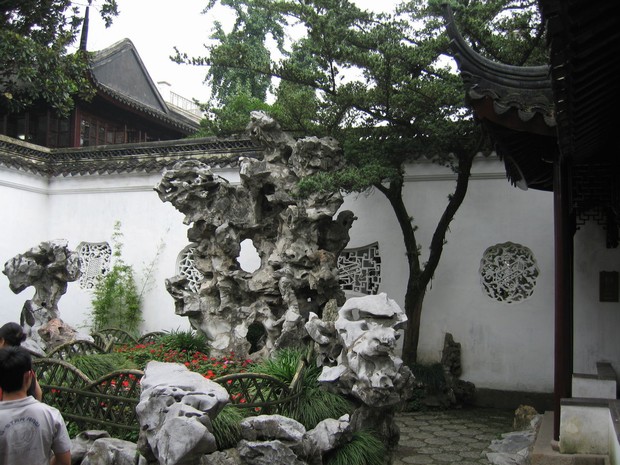
Covering 1.1 hectares’ wide land, Lion Grove Garden is special for its multiple types of rockeries that look very magnificent and powerful. Therefore, it is also called the “Kingdom of Rockeries.” Moreover, with its multiple vigorous ancient cypresses and fragrant blossoms, the Lion Grove Garden surely can be praised as the “heaven on earth” and “garden in city.”
As one of Suzhou’s four great classical gardens, it offers a unique journey through time, art, and philosophy, making it worth coming and making it an unmissable highlight of any Suzhou travel.
Quick Lion Grove Garden Facts
A Garden Forged by Faith: The History of Lion Grove
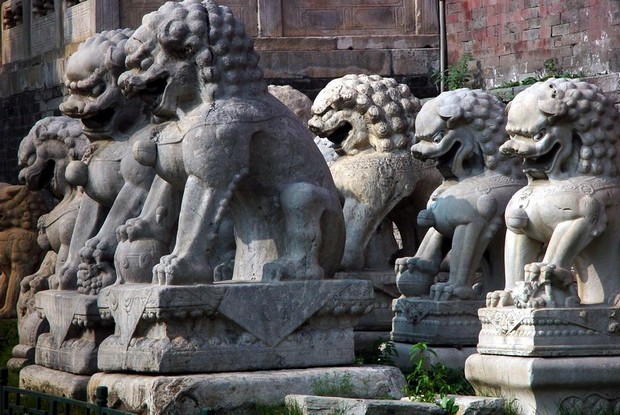
Why is Lion Grove Garden called Lion Grove? The story of Lion Grove Garden begins not with an aristocrat, but with a monk. In 1342, during the Yuan Dynasty, the Zen Buddhist monk Tianru built this garden in memory of his teacher, the revered High Monk Zhongfeng. The garden’s unique identity was born from its landscape; the extraordinary Taihu limestone rocks were seen to resemble lions, powerful symbols in Buddhist mythology representing the vigor of the Buddha’s teachings. Thus, Shizilin, or Lion Grove, earned its enduring name.
>> Learn more about Chinese Buddhist Culture
Actually, Lion Grove Garden has changed hands and been renamed several times. It was first given the name of Lion Grove, as the grotesque rocks of its man-made hill resembled lions. Later, in 1342, its name was changed to Puti Temple.
Lion Grove Garden was a popular center for Buddhist, as well as literary activities. Many scholars created their paintings or lines after being inspired by the garden. In 1917, it was purchased by I.M. Pei, who eventually donated it to the state after the founding of the People’s Republic of China, ensuring its preservation for people around the world to enjoy.
What to See in Lion Grove Garden
The Legendary Rockery & Stone Forest
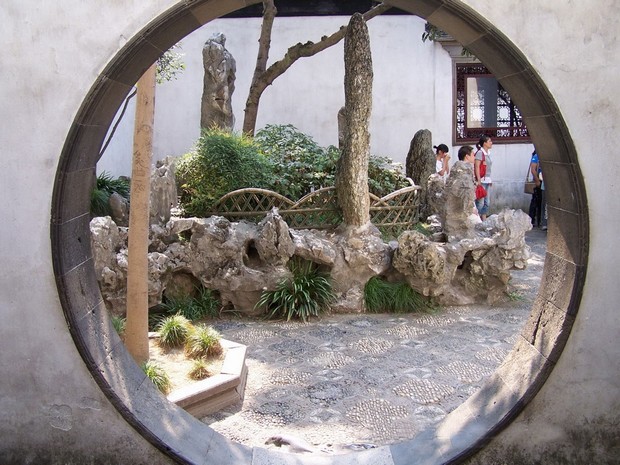
This is the heart and soul of the garden, as its rockeries represent one of the most intricate and complex examples of artificial hill construction in classical Chinese gardens.
The maze-like rock garden is a breathtaking Suzhou rockery garden masterpiece. Over 20 winding paths, bridges, and 22 caves weave through the jagged, porous limestone and will leave you with a deep impression during your Suzhou tour.
>> Recommend you One day Suzhou Highlight Tour
Zhenquting (True Delight Pavilion)
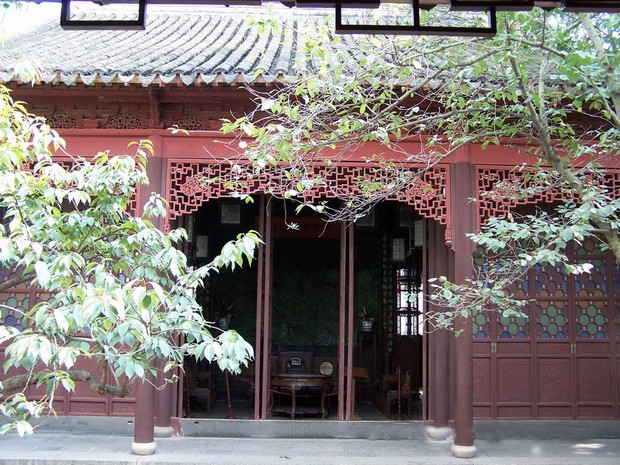
The True Delight Pavilion (真趣亭) in Lion Grove Garden stands on the south bank of the pond, facing the rockeries in the garden. Its structure is large and unique. The front two pillars are flower basket-shaped hanging columns, while the rear is partitioned by gauze to form an inner corridor, and the ceiling inside is highly ornamental, featuring a flat-arched beam topped by a diamond-shaped canopy and a boat-shaped canopy.
Its pillars and beams are intricately carved and painted, gilded with gold. The short columns of the goose-leg feature chairs have lion-shaped capitals. Inside the pavilion, it hangs a plaque inscribed with the words “True Delight” in green characters on a gold background, personally penned by Emperor Qianlong.
>> Learn more about Top 8 Greatest Chinese Emperors in History
Wenmei Ge (Pavilion for Greeting Plum Blossoms)
The Wenmei Ge (问梅阁) sits atop the rockery in the western part of the garden, connected by corridors at its northern and southern ends. It was a historic gathering spot for scholars, adorned inside and out with delicate plum blossom motifs.
The “plum” in “Greeting Plum Blossoms” carries dual meanings: first, it refers to the “Reclining Dragon” plum (卧龙梅) tree before the pavilion; second, it symbolizes the great Zen master Daimei Fachang. This latter interpretation alludes to the Zen koan story of Master Mazu asking about the plum blossoms and praising, “The plum is ripe.”
In the Wenmei Ge, plum blossom motif adorn the window patterns, utensils, and floor. And its paintings and calligraphy on the screens also draw inspiration from plum blossoms, forming a unique landscape within the Lion Grove Garden.
Yanyu Tang (Yanyu Hall)
Yanyu Hall (Hall of Peace and Happiness, 燕誉堂) is the main hall in the whole Lion Grove Garden, the name of which means the peaceful and happy place for treating guests. Its round arched gate boasts exquisite craftsmanship and elegant inscriptions. In the past time, it allowed visitors to savour the fragrance, appreciate the paintings, delight in the scenery, and contemplate in seclusion.
This main hall serves as the owner’s banquet hall for entertaining guests. In this antique hall separated into the northern and southern parts, delicate decorations, furniture, and layout are distinct and delicate.
Making the Most of Your Visit: Things to Do in Lion Grove
Exploring the Stone Maze
Venturing through the rockery maze is the very soul of Lion Grove Garden, Suzhou. Whether you’re an adult or a child, you can embark on an adventure within this kingdom of rock formations. It can be the highlight of your family tour.
The rockeries of Lion Grove Garden are divided into three tiers—upper, middle, and lower—featuring nine paths and twenty-one caves. We recommend you spend 30 minutes exploring freely to discover the over 500 lion sculptures hidden among the stones.
Photograph Spots for the Photographer
Beyond the garden’s bizarre rocks, you can also capture the landscape through the crabapple-patterned windows at the Yanyu Hall or take a photo of the red pillars and golden plaque of the Zhenqu Ting. Finally, make your way to the stone boat in the lake to photograph its stained-glass windows—a rare sight among vessels in the Jiangnan region.
Lion Grove Garden for kids
The Lion Grove Garden is an ideal place for children to explore. Here, your little ones can not only experience the charm of the rockery maze but also venture to the Nine Lion Peaks placed in the yard of the Small Square Hall to discover lion-shaped stones in various forms.
Walking Paths in Lion Grove Garden
After entering Lion Grove Garden, you can head for the Yanyu Hall then visit the Small Square Hall, pointing at Cypresses Hall, Flower Basket Hall (花篮厅), and Garden of Five Age-old Pines (古五松园) in order.
After viewing these, you can go to find the characters “Zhen Qu” written by Qianlong in the Zhenqu Ge and find more joy in the Stone Boat. Then, take a walk to Mid-lake Pavilion (湖心亭) to enjoy the lake view. After that, you will admire the decoration of plum blossoms in the Wenmei Ting and visit the nearby Fan Pavilion (扇亭).
Finally, you can play in the large group of rockeries in the water pool and visit the Sleeping Cloud Room and leave the Lion Grove Garden in the direction of Standing-in-Snow Hall.
Best Time to Visit Lion Grove Garden
The Lion Grove Garden is suitable for visiting all year round. In spring (Mar-May), Suzhou’s pleasant weather and blooming flowers add vibrant color to the garden.
In autumn (Sep-Nov), the clear skies and comfortable temperatures are ideal for exploring. The garden is particularly beautiful draped in fall foliage.
For summer and winter, you should reach the garden on mornings in summer to avoid the peak heat, while winter offers a stark, poetic beauty with fewer crowds. The rockery dusted with snow is a rare and magical sight.
>> Learn more about Suzhou Weather & Best Time to Visit
How to Get to Lion Grove Garden
By Metro
You can take Line 1 or Line 4 to Lindun Lu Station. The garden is a short 5-10 minute walk from the station.
On Foot
It’s within 7-minute walking distance of other Suzhou gardens like the Humble Administrator’s Garden, making it easy to combine visits on your Suzhou travel itinerary.
Lion Grove vs. Other Suzhou Gardens: Which One is for You?
Suzhou is famous for its classical gardens. Here’s a form to help you choose.
| Garden | Dynasty | Highlights |
|---|---|---|
| Lion Grove (狮子林) | Yuan (1271-1368) | Spectacular, maze-like rock garden |
| The Humble Administrator’s Garden (拙政园) | Ming (1509) | Largest in Suzhou; expansive water features, elegant islands |
| Lingering Garden (留园) | Ming (1593) | Renowned for its miniature mountain & water landscapes and exquisite gallery. |
| Master-of-Nets Garden (网园) | Song (1174) | Small but perfectly formed; famed for its night opera performances. |
Explore Suzhou with Easy Tour China
While Lion Grove is just one of the jewels in Suzhou’s crown. The city is famed for its classical gardens and ancient canals, such as Pan Gate and Pingjiang Road. Just let Easy Tour China craft a seamless Suzhou tour that blends poetic reflection with timeless beauty for you. Here are some recommended Suzhou itineraries.