Top 10 Classical Gardens in Suzhou
Table of Contents
- 1. Humble Administrator's Garden
- 2. Lingering Garden
- 3. Lion Grove
- 4. Garden of Net Master
- 5. Canglang Pavilion
- 6. Couple's Retreat Garden
- 7. Tiger Hill
- 8. Tuisi Garden
- 9. Meditation Garden
- 10. Hanshan Temple
Outgrowing its original function dedicated to providing a tranquil and meditative atmosphere for ancient Taoist poets, classical Chinese gardens later were much favored by rich families and designed as their private gardens in the Song and Ming dynasties.
There are nearly a hundred classical gardens in Suzhou – a heavenly city on earth. Ten of them are known among the best gardens in China, and form a big draw for travelers and expats in Suzhou.
What Suzhou Gardens Famous for? History, Background, and Highlights
The Suzhou gardens hold an important position in the history of Chinese gardens. The beautiful natural environment, developed social economy, and prosperous culture and art of Suzhou provided a natural and rich material foundation and unique resources for the prosperity of Suzhou landscape gardens.
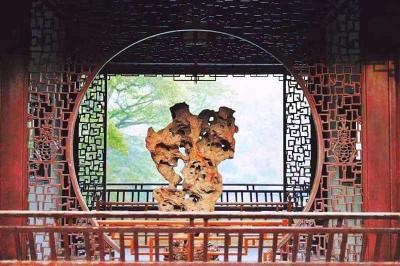
Historically, Suzhou had long been a tourist destination in China. Gardens gradually formed from natural landscapes, starting from the palace gardens of the Wu kings in the Spring and Autumn period, were mostly built in the mountains and waters of Taihu Lake. In the Qin and Han dynasties, Suzhou had a considerable scale of the city. Influenced by the previous royal palace gardens, local officials in Suzhou built gardens in their government offices.
Since the Han dynasty, private gardens in Suzhou gradually emerged, quite different from the imperial palace gardens. The owners sought the charm of natural landscapes in their own gardens and planted flowers, trees, and raised animals in the gardens.
In the late Eastern Han dynasty, Buddhism was introduced. There were many scholars living in seclusion in Suzhou, seeking immortality and alchemy, and temples and Taoist temples flourished. There were gardens in the temples, with beautiful flowers, waterfalls, rocks, and stones.
In the Tang dynasty, culture had a significant influence on garden art. Wang Wei's theory that "poetry contains pictures, and pictures contain poetry" (commented by Su Shi) was directly applied to garden design. During the Song dynasty, Chinese landscape painting had reached its peak. Expressed landscape gardens gradually became the mainstream of garden design.
During the Ming and Qing dynasties, Suzhou's handicrafts and commerce were very prosperous. A total of more than 300 gardens and courtyards were built, and Suzhou was praised as the "City of Gardens".
In 1997 and 2000, nine classical gardens—the Humble Administrator's Garden, Lingering Garden, Master of the Nets Garden, Huanshou Villa, Canglang Pavilion, Lion Grove Garden, Yipu Garden, Couple's Garden, and Tui Si Garden—were inscribed on the UNESCO World Heritage List as exemplary representations of Chinese classical garden art.
A quick Overview of Suzhou's Top 10 Gardens
No sure which garden in Suzhou to visit? With our comparison guide, you can have a general idea quickly.
| Garden Name | Core Features & Status | Historical Period | Suggested Visit Duration | Best For |
|---|---|---|---|---|
| Humble Administrator's Garden | One of China's Four Great Gardens, largest classical garden in Suzhou, water-centric layout. | Ming Dynasty (1509) | 2-3 hours | First-time visitors seeking the essence of Suzhou gardens. |
| Lingering Garden | One of China's Four Great Gardens, exquisite architecture, famous rocks, rich spatial variety. | Ming Dynasty | 1.5-2 hours | Visitors who appreciate architectural art and strange rocks. |
| Lion Grove Garden | Renowned as the "Kingdom of Rockery", massive, labyrinthine lake-stone formations. | Yuan Dynasty (1342) | 1.5 hours | Families, visitors who enjoy exploration and climbing rockeries. |
| Master of the Nets Garden | UNESCO World Heritage, the epitome of a small garden, compact, refined and delicate. | Southern Song Dynasty | 1 hour | Visitors preferring elegance, tranquility, and intricate details. |
| Pavilion of the Surging Waves | Suzhou's oldest garden, unique for having a moat surrounding the garden. | Northern Song Dynasty | 1 hour | Visitors seeking a sense of history and rustic charm. |
| Tiger Hill | Known as the "First Scenic Spot in Wu Zhong", iconic Cloud Rock Pagoda (Leaning Tower). | Ancient | 2 hours | Visitors liking a blend of natural scenery and historical relics. |
| Couple's Retreat Garden | UNESCO World Heritage, unique "one residence, two gardens" layout, symbolizes romantic love. | Early Qing Dynasty | 1 hour | Couples, visitors interested in romantic cultural symbolism. |
| Retreat & Reflection Garden | UNESCO World Heritage, unique horizontal layout and "waterside-adjacent" architecture. | Qing Dynasty (1885) | 1 hour | Visitors interested in unique layouts and Qing garden art. |
| Meditation Garden | A modern garden, houses a large collection of Lingbi stones. | Contemporary (2003) | 1.5 hours | Visitors interested in contemporary garden art and stone collections. |
| Hanshan Temple | A millennium-old monastery famous from classical poetry, known for its bell. | Ancient | 1 hour | Visitors interested in Buddhist culture and classical poetry. |
#1 Humble Administrator's Garden
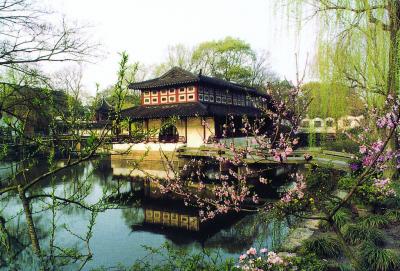
What is the most famous garden in Suzhou? Humble Administrator's Garden is the biggest one in Suzhou, and queen of classical Chinese gardens. It is the prototype of Daguan Garden of “A Dream in Red Mansions”, one of the four great novels in ancient China.
The garden is divided into three parts: the east garden, the central garden and the west garden. The east garden is spacious and open. The central garden is the core of the entire garden. The west garden features exquisite architecture.
To the south of the garden is the residential area, which reflects the typical multi-story layout of traditional residential houses in the Jiangnan region. There is also a Suzhou Garden Museum, which is the only specialized museum of gardens in China.
#2 Lingering Garden
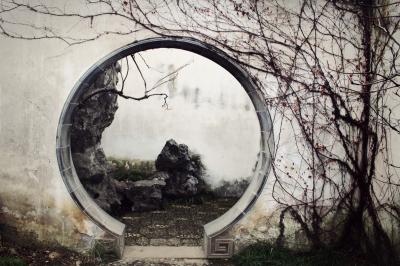
One of the four classical gardens in Suzhou and China (along with Humble Administrator's Garden, Summer Palace and Chengde Mountain Resort), Lingering Garden features 700-meter-long undulating corridors that connect the archways, pavilions, ponds and artificial hills. The number of buildings in this garden ranks first among all the gardens in Suzhou.
The entire Lingering Garden is divided into four parts, allowing you to appreciate four distinct scenes: landscapes, rural areas, mountains and forests. The central part is renowned for its water features and is the core of the entire garden; the eastern part is characterized by the curving courtyards and corridors; the northern part features rural scenery and a newly established bonsai garden; the western part is the highest point of the entire garden, with a unique rock formation.
The Hengbi Mountain House and Mingse Hall in the south of the pond are the main viewing buildings of the Ling Garden.
#3 Lion Grove Garden
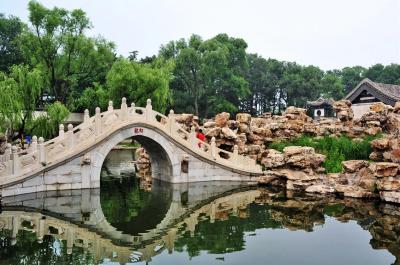
Built in 14th Century, Lion Grove is quite small but shows subtle sophistication in the layout.With the largest collection of ancient rockeries in China, Lion Grove is known as the "Kingdom of Rockeries".
The highest peak in the garden is called "Lion Peak". And there are buildings such as "Standing Snow Hall", "Sitting Cloud Room", "Pointing Cypress Pavilion", and "Questioning Plum Pavilion".
Lion Grove is a Zen temple garden. In Buddhism, the Buddha is like a lion, and the lion's seat is where the Buddha sits, generally referring to the seat of a high monk. The forest is the Zen temple. Therefore, Lion Grove itself is a religious term.
#4 Garden of Net Master
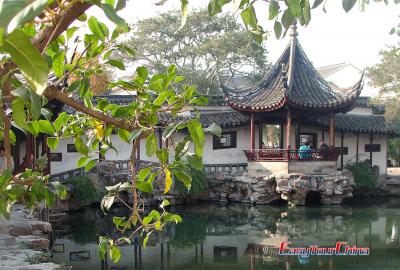
Another representative works of classical Chinese gardens, Garden of Net Master was built in 1174, and was home to many ancient scholars and litterateurs.
The Garden of Net Master covers an area of approximately half an hectare and is the smallest garden in Suzhou. It features houses, pavilions, stoneeries, flowers and plants, embodying the essence of Suzhou garden layout.
The Zhuoyin Water Pavilion and the Kansong Dujiaoxiang overlook each other across the pond, serving as a place for reading and painting. The Yuediao Fenglai Pavilion and the Shiyao Lan Pavilion are located opposite each other, being excellent spots for viewing fish and enjoying the reflections in the water. The Dianchunxiu courtyard forms an independent compound and is the place where the owner reads and refines himself.
#5 Canglang Pavilion
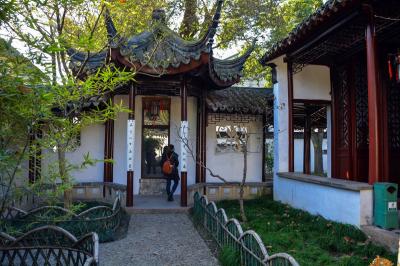 The oldest classical garden in Suzhou, it was built in 1044 during North Song Dynasty.
The Pavilion of the Surging Waves is centered around the mountains and forests. Buildings are arranged around it. The pavilion and the long corridor that slopes along the mountains also utilize the water painting outside the garden.
Through the infiltration effect of the lattice windows on the double corridors, the mountains, water, poolsides, rockeries and pavilions inside and outside the garden are connected, making the water surface, pool banks, rockeries and pavilions blend into one.
#6 Couple's Retreat Garden
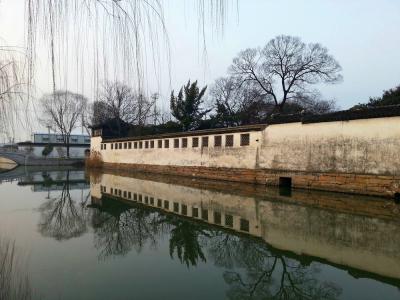
The special yellowstone rockery, classical courtyards, small and exquisite pavilions, long winding corridors, and ponds with bridges constitute harmonious and varied scenes.
The Cou Garden was built during the reign of Emperor Yongzheng of the Qing Dynasty. The garden is surrounded by a river on three sides and faces the street on one side. Because there are two gardens built on either side of the residence, it is called "Ou Garden", and the character "Ou" is related to the character "Even" (偶).
#7 Tiger Hill
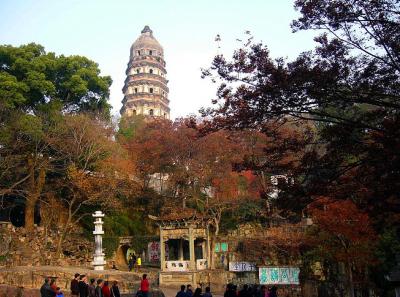
Surrounded by pretty natural scenery, Tiger Hill attracts people by grand old trees and the century-old Tiger Hill Pagoda.
The mountain body of Tiger Hill is composed of Jurassic volcanic magma. Later, it was converted into a temple and named Tiger Hill Temple, with a long history of over 2,500 years.
Tiger Hill still boasts small green stone bridges, stone archways, and artificial rockeries made of lake stones. There are scenic spots such as Yongcui Villa, Jianchi Pool, Hukou Pagoda, and Jianliang Hall.
#8 Tuisi Garden
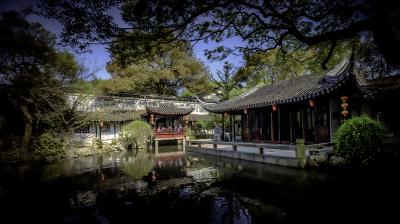
Water is the theme of Tuisi Garden in Tongli Ancient Town, suburb of Suzhou. An outstanding red marble boat leans against the water.
Tuisi Garden covers a total area of 9.8 mu. This garden departs from the traditional longitudinal structure of gardens, instead featuring a horizontal layout: the residence on the left, the courtyard in the center, and the garden on the right.
Tuisi Garden embodies the best of Qing Dynasty garden architecture. Each building within the garden can stand alone as a scenic view, while also corresponding to another landscape feature, making it an absolute classic among Suzhou's private gardens.
#9 Meditation Garden
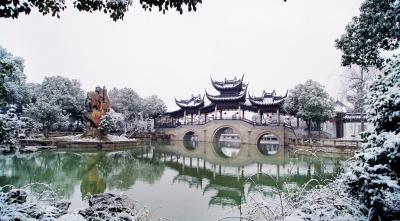
3km west of Tongli, Suzhou, Meditation Garden stands out for the stunning Lingbi stones displayed in the Rare Stone Museum.
The garden features exquisite and unique architecture, including Crane Pavilion Bridge, Small Rainbow Bridge, Jingyuan Hall, Tianxiang Study, Pangshan Thatched Cottage, Suzhou Brick Carving and Bonsai Garden, Stele Corridor for Scientists of All Dynasties, and Poetry Corridor for Stones, among other attractions.
#10 Hanshan Temple
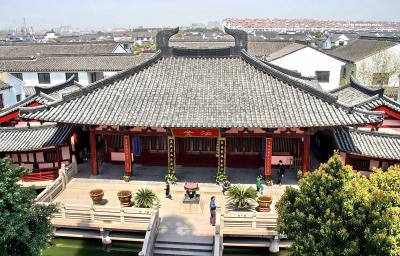 It is one of the most Buddhist Temples in China, and a beautiful garden in Suzhou, housing dozens of Qing Dynasty architectures and beautiful Buddhist statues.