Tiger Hill (Huqiu)
Often called “the No.1 scenic spot of Wu”, this Suzhou attraction is famous for its traditional Chinese landscaping and a unique layout where “the mountain hides the temple, and the temple hides the mountain.” If you are planning a trip to Suzhou, don’t miss this site.
Tiger Hill Facts
- Peak season (May 1 – October 31): 7:30 am – 6:00 pm;
- Off-season (November 1 – April 30): 7:30 am – 5:30 pm
Legends and History of Tiger Hill
The history of Tiger Hill, Suzhou is inseparable from legend. According to records, King Helü of the State of Wu (Spring and Autumn Period, 770–476 BC) was buried here over 2,500 years ago, along with treasures that included thousands of swords, gold, and jade. The tomb was said to involve 100,000 workers and even elephants to move stones and soil. After three years, the mausoleum was sealed—and its entrance has never been found.
Later rulers weren’t convinced. Qin Shi Huang and Sun Quan of Eastern Wu both sent men to dig for the tomb, but found nothing. What they did leave behind was a deep pool formed by their digging—today known as Sword Pond, one of the most mysterious spots in Tiger Hill.
Must-Visit Scenic Spots in Tiger Hill
Tiger Hill Pagoda
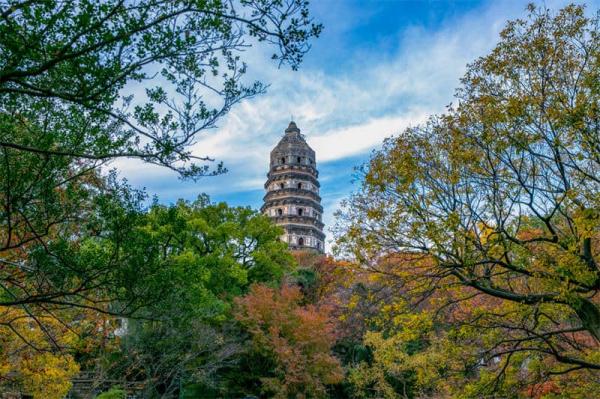
Also called Huqiu Tower, the Suzhou Tiger Hill Pagoda is the absolute icon of the hill. Leaning but not falling, it’s often nicknamed the “Leaning Tower of Pisa of the East.” Built over 1,000 years ago, the brick pagoda stands 47 meters tall and tilts at about 2.48 degrees.
From the Southern Song Dynasty to 1860, the Tiger Hill Pagoda caught fire on seven occasions. The top and eaves of each story of the pagoda were destroyed; only the brick structure remains. The 47-meter-high pagoda is tilting now at an angle of 2.48 degrees. It has become a kind of trademark of Suzhou. During your Suzhou travel, you can easily find its image on food packages, tickets, and on local T-shirts.
Broken Beam Hall
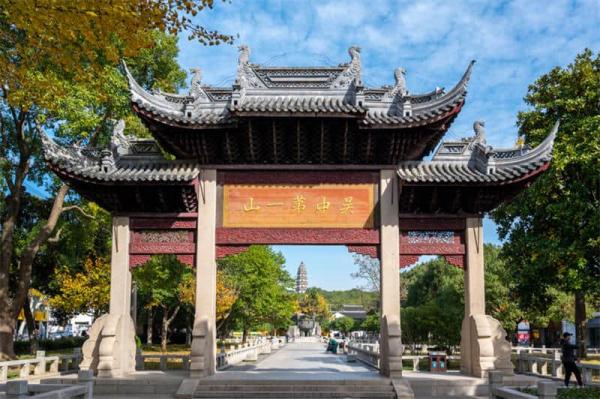
Built during the Yuan Dynasty, Broken Beam Hall is Tiger Hill’s second main gate—and an architectural marvel. The hall’s main beam is made from two joined sections, supported by complex wooden brackets that distribute weight without using a single metal nail.
Thanks to pure structural physics, the building has stood for centuries. It’s one of those places where you pause, look up, and quietly admire the craftsmanship of ancient Chinese architecture style.
Sword Pond
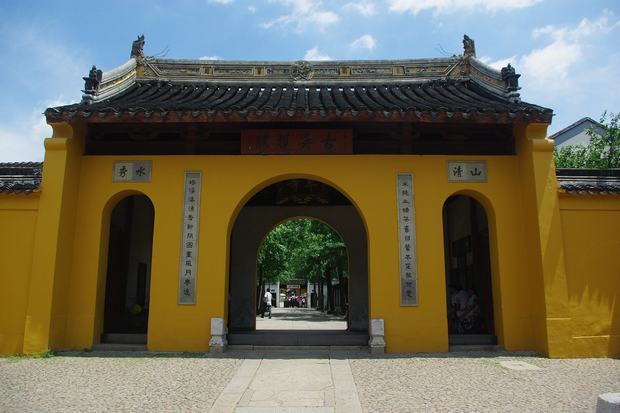
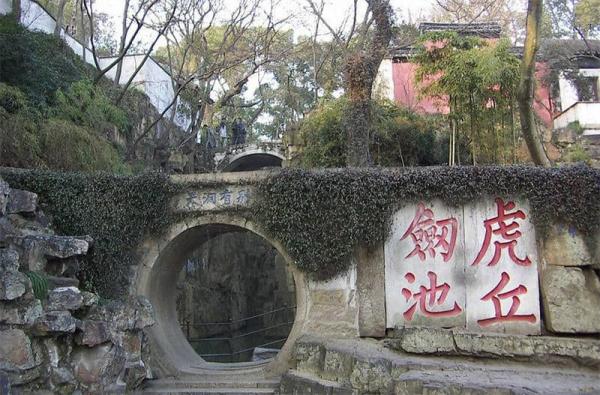
Sword Pond in Tiger Hill of Suzhou is a famous sight and easily the most mysterious. Legend says this is where the entrance to King Helü’s tomb lies. The round moon gate beside the pond bears the Chinese calligraphy “Tiger Hill Sword Pond,” attributed to Yan Jun, son of Tang Dynasty master Yan Zhenqing.
Inside the gate, you’ll also see inscriptions linked to famous calligraphers like Mi Fu and Wang Xizhi. Even if you’re not into calligraphy, the quiet, shadowy atmosphere here feels heavy with history.
Wanjing Villa
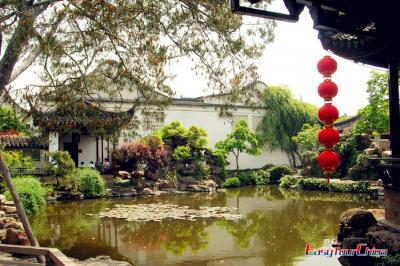
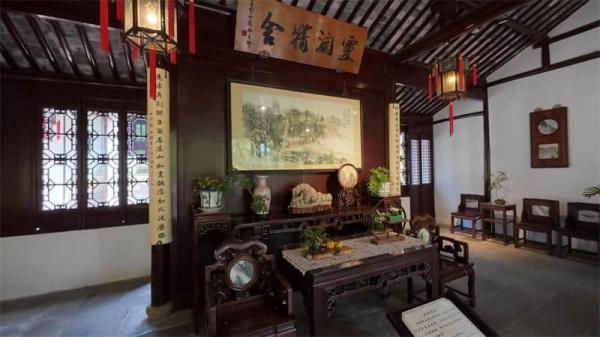
Wanjing Villa of Tiger Hill is a representative of Jiangnan garden aesthetics. Rockeries, ponds, pavilions, and corridors are arranged in a way that feels natural rather than planned. The bonsai exhibition here is a real highlight, with over 500 medium and large bonsai on display. If you love plants, this spot alone is worth slowing down for.
Yongcui Villa
Yongcui Villa in Tiger Hill is the only waterless garden in Suzhou, which already makes it special. Built along the hillside, it follows a terraced layout instead of the typical pond-centered design.
The flowing calligraphy of “dragon, tiger, leopard, and bear” on the walls was written during the Xianfeng era. It adds a bold, masculine energy that contrasts nicely with the softer classical Chinese garden style found in other Suzhou gardens like the Humble Administrator's Garden or Lion Grove.
>> Recommended 1-day Suzhou highlight tour
Tiger Hill Travel Routes
There are many sites to explore in Tiger Hill, China. For those who are interested in the hill’s history and legends, the classic route is for you. If you travel to Suzhou’s Tiger Hill with kids and elders, choose the family-friendly route.1. Classic Route (About 4 Hours)
Head Gate → Broken Beam Hall → Yongcui Villa → Sword-Testing Stone → Zhenshi → Zhenniang Tomb → Sun Wu Training Ground → Thousand-People Stone → Two Immortals Pavilion → Sword Pond → Third Spring → Ancient Stone Guanyin Hall → Tiger Hill Pagoda → Calligraphy Desk Pine Shade → Little Wudang → North Gate2. Family-Friendly Route (About 3 Hours)
North Gate → Little Wudang → Tiger Hill Pagoda → Sword Pond → Thousand-People Stone → Sun Wu Training Ground → Zhenniang Tomb → Sword-Testing Stone → Wanjing Villa → Xixi Loop → Head GateBest Time to Visit Tiger Hill
Spring and autumn are the best times to visit Tiger Hill, during which the temperatures and climate are pleasant for travel. In spring, flowers bloom along the paths; in autumn, the skies are clear and blue, and the pagoda stands out beautifully.That said, Tiger Hill in Suzhou is still enjoyable year-round, and even summer has its charm if you pace yourself and take advantage of shaded areas. Winter is the slack season, and that’s part of the appeal. When plum blossoms start to bloom, their scent drifts through the cold air, which makes this place more attractive.
>> Learn more about Suzhou’s climate and weather
Seasonal Activities at Tiger Hill
Tiger Hill Temple Fair
Usually held around Mid-Autumn Festival and National Day of China, the Tiger Hill Temple Fair is one of the busiest events of the year. You’ll see dragon and lion dances, folk parades, and traditional performances from across China. From Anshun ground opera to theatrical shows inspired by Tang Bohu, you can experience traditional Chinese culture in Suzhou at its best.Chinese New Year Garden Fair
During Chinese Lunar New Year, Tiger Hill, Suzhou will also hold activities and performances like Yingge Dance from Chaoshan, Twenty-Four Solar Terms Drums, and dragon-lion parades. Ceremonies such as the “Opening the Fortune Gate” at Broken Beam Hall are perfect for first-time visitors to indulge in the joyful atmosphere.Flower Festival
Every March, Tiger Hill hosts its Flower Festival to celebrate blossoms and seasonal beauty. During this time, you’ll see flower markets, parades, and the appearance of the Twelve Flower Goddesses, and all these make it worth a visit.Three-Flower Summer Festival
From late June to August, the Three-Flower Festival cools things down with jasmine, magnolia, and citrus blossoms. Misty paths, live silk-and-bamboo music, pop-up performances, and summer snacks all bring a surprisingly refreshing experience on hot days.
>> Recommended 2-day Suzhou culture tour
How to Get to Tiger Hill, Suzhou
From Shanghai or Nanjing:
Take a high-speed train to Suzhou Railway Station. Afterward, hop on Tourist Bus No. 1 to Tiger Hill. Or you can take Metro Line 2 and transfer to Line 6 to get from Suzhou Train Station to Tiger Hill.From downtown Suzhou:
Attractions Near Tiger Hill
Suzhou Tiger Hill Wedding Street
Known locally as Huqiu Wedding Dress Street, this is the largest wedding dress market in East China. When traveling in Suzhou, it’s fun to drop by—whether you’re getting married or just curious. From luxury gowns to budget-friendly designs, Chinese or Western styles, the variety is impressive. If you want to try on the wedding dress, staying in a hotel near Tiger Hill will be a good option.Shantang Street
Just outside Tiger Hill’s south gate, Shantang Street is a great place to continue exploring during your Suzhou tours. You can walk west for quieter historic sections, or head east for bustling crowds, shops, and snacks.China Nanshe Memorial Hall
The Nanshe Memorial Hall near Tiger Hill of Suzhou allows you to get insight into modern Chinese intellectual history. There, old photos, manuscripts, and artifacts bring the spirit of early 20th-century scholars to life.Explore Tiger Hill with ETC
With over 20 years of experience in bespoke private China tours, Easy Tour China designs flexible tours to Tiger Hill that match your interests—whether that’s history, gardens, or slow city walks. Looking to explore the city deeply? Take a look at our ready-made China tour packages including Suzhou.
Want a customized tour of Suzhou? Feel free to contact us.