Tongli Water Town
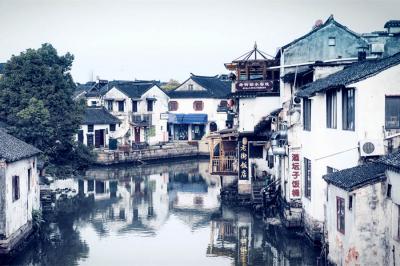
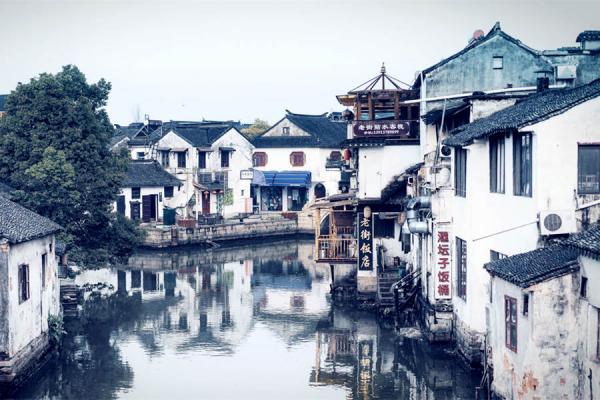
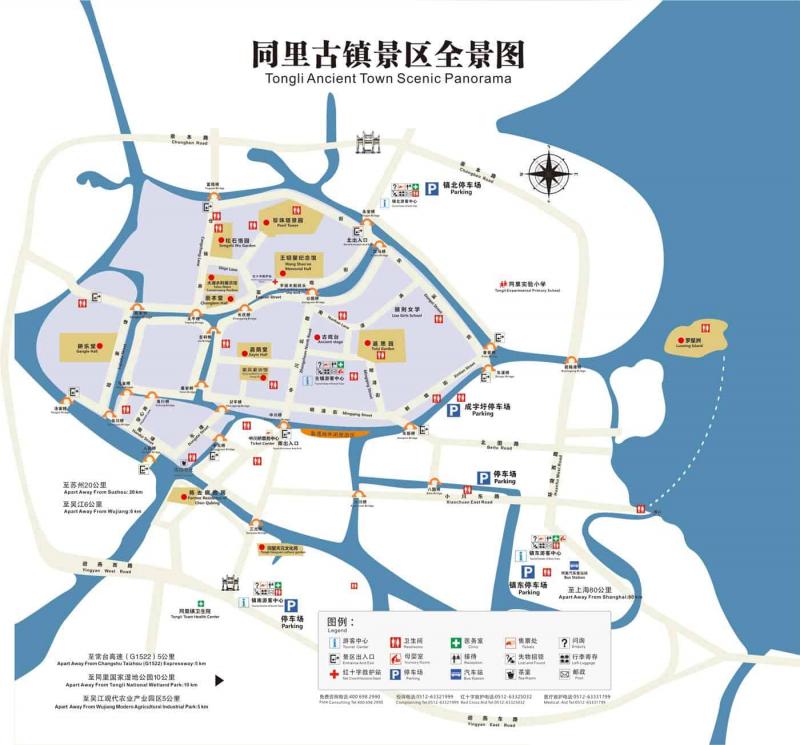
Tongli Ancient Town is an aged water town located 80 kilometers east to Shanghai Hongqiao Airport and 18 kilometers north to Suzhou city. It lies at the bank of Tai Lake, surrounded by eight lakes in four sides. Tongli Ancient Town is characterized by its beautiful scenery, ancient canals, stone bridges and well preserved ancient architecture including private gardens, temples and houses.
Crowned as "Small Oriental Venice", the beautiful and tranquil water town is crisscrossed by canals and is slightly round in shape, covering an area of 86 hectares. In history, is called "Futu" which means a rich land. In Tang Dynasty, the name was changed as Tongli for its luxuriousness. With a history of over 1000 years, buildings well preserved from the Ming and Qing Dynasties standing by the rivers fill the town.15 small river lanes crisscrossed the town, over which spans around 49 stone bridges in variety of styles. Tongli Water Town creates a unique living environment which joins man with water and the nature harmoniously.
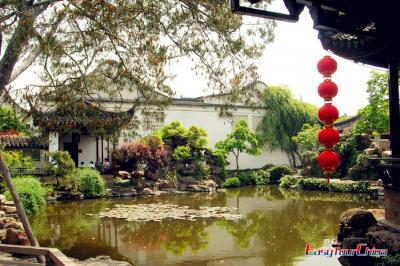
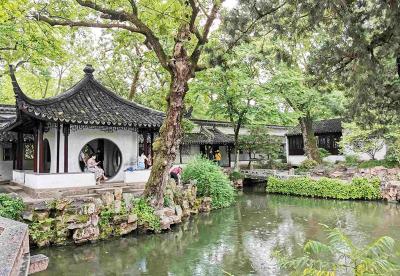
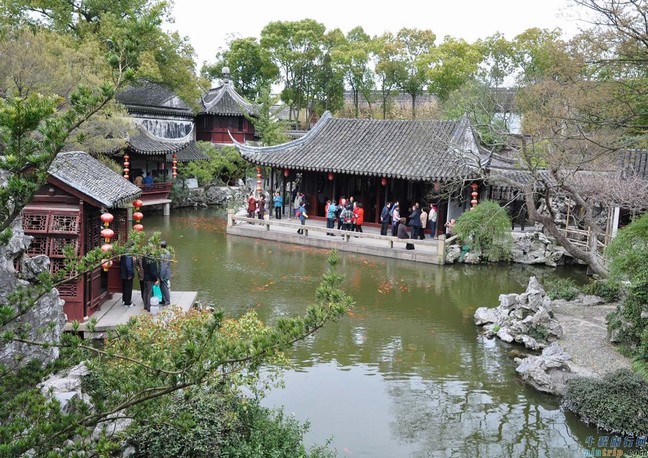
The most famous attractions in Tongli Town for tourists are called the One Garden, Two Halls, and Three Bridges. The garden is called the Tuisiyuan Garden, or Retreat and Reflection Garden, which is one of the most famous classical gardens in China and was declared as the world cultural heritage in 2001. It lies in the center of the town, decorating with peaceful ponds, waterside pavilions, tranquil corridors, beautiful rockeries and bridges. The Two Halls are the Chongben Hall and the Jiaying Hall and the Three Bridges are Peace and Tranquility (Taiping) Bridge, Luck (Jili) Bridge and Lasting Celebration (Changqing) Bridge. During important occasion, such as wedding, people would like to walk through the three bridges, which is supposed to bring peace, fortune and happiness in their lives.
Suzhou Tongli Water Town Facts:
Brief History of Tongli Water Town in China
The history of Suzhou Tongli Ancient Town can be traced back to the Liangzhu Culture period, more than 5,000 years ago. As early as the Neolithic Age, ancestors lived and thrived here through slash-and-burn agriculture. During the Spring and Autumn Period, it was the most prosperous area in the Wu region, hence the name "Futu" (meaning "rich land").
During the Han and Tang Dynasties, it became even more prosperous. In the Song Dynasty, it was renamed Tongli. By the Qing Dynasty, the population had increased daily, and the town had expanded, initially forming the ancient town it is today.
What to See in Tongli Town: Top Attractions
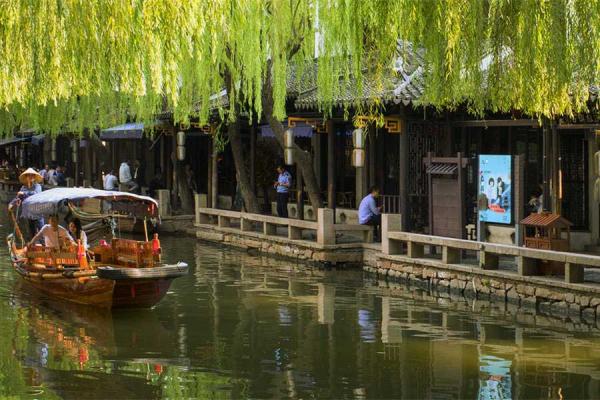
Tongli Old Town is known as one of the Top 10 Old Water Towns in China. The entire town is divided into seven small islands by 15 rivers arranged in a "川" (river) shape, and forty-nine ancient bridges spanning these rivers connect the entire town, creating a typical water town landscape of small bridges, flowing water, houses, and covered boats. Most of the buildings in the town are residences, gardens, temples, and former residences of famous people built during the Ming and Qing dynasties.
Retreat and Reflection Garden
The Retreat and Reflection Garden, one of the four most famous private gardens in Suzhou, was built between 1885 and 1887 (the eleventh to thirteenth years of the Guangxu Emperor's reign). Ren Lansheng, who had served as the military commissioner of Feng, Ying, and Liusi in Anhui, was demoted and returned to his hometown. He invited Yuan Long, a painter from the same town, to design and build the garden. The name of the garden is taken from the phrase "advance with loyalty, retreat with repentance" in the Zuo Zhuan (a historical text). The garden boasts a complete array of pavilions, terraces, towers, galleries, archways, bridges, waterside pavilions, halls, rooms, and verandas, all seemingly floating on the water's surface, with a pond at its center.
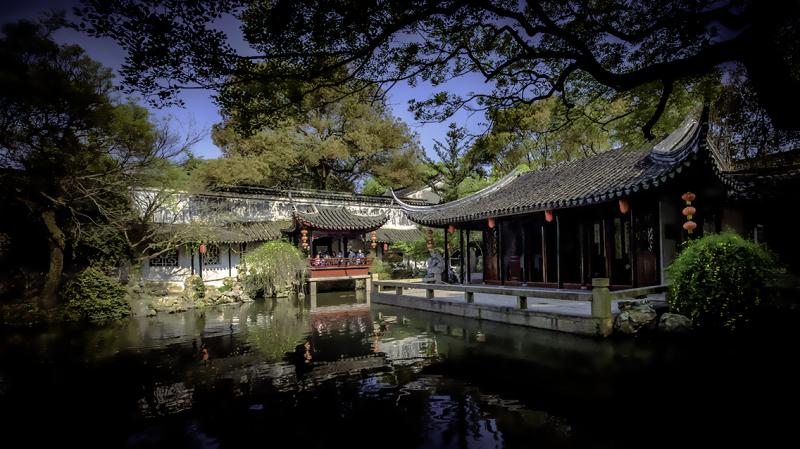
The inner residence features two ten-story buildings, the Xianglou, located to the north and south, serving as the living quarters for the garden owner and his family. A covered corridor connects the two buildings. Staircases are located on both the east and west sides of the covered corridor, providing shelter from the rain and allowing passage for servants. Several servant rooms are located below the Xianglou.
As the garden owner's residence and treasure trove, the inner residence's stone gates on both sides are constructed of plain white bricks for fire and theft prevention. These brick-and-wood fire-resistant doors are said to be the only original pieces among the Ming and Qing dynasty buildings in Tongli; the rest are modern replicas.
Ming and Qing Street
One of the commercial streets of Tongli Ancient Town. Built in 1996, the main building is over 160 meters long and retains a relatively intact parallel street layout characteristic of the Jiangnan region, with an upper and lower street. The four characters "Qingming Legacy" at the entrance were inscribed by Fei Xiaotong.
>> Recommended 3 Days Suzhou Tongli Water Town Tour
Chongbentang (Chongben Hall)
Chongbentang is located at the northern end of Changqing Bridge on Fuguan Street in Tongli Water Town. Built facing the water, it faces Jiayintang across the river to the southeast and three bridges, including Changqing Bridge, to the west. It has five courtyards: a gate hall, main hall, front building, rear building, and kitchen. Although less than one acre in size and small in scale, the buildings are exquisitely crafted.
Currently, Chongbentang is open to the public as a Jiangnan Water Town Folk Culture Exhibition Hall, displaying over one hundred artifacts related to Chinese wedding customs in the Jiangnan Water Town. The first courtyard contains the sedan chair hall, the second a wedding custom information hall, the third a wedding hall, and the fourth a bridal chamber.
At the same time, Chongbentang regularly hosts wedding performances, allowing visitors to experience the rich folk wedding art of Tongli up close. In 2023, Chongbentang was designated as one of Suzhou's "Characteristic Marriage Registration Service Points," allowing couples to make appointments for registration and experience the true meaning of marriage within the context of traditional Chinese culture.
Jiayintang (Jiayin Hall)
Jiayintang, located at the entrance of Youjia Lane on Zhuhang Street, was built in 1922. It is a four-courtyard building with exquisitely carved doors, windows, beams, and pillars. The owner, Liu Bingnan, a native of Beishe, initially ran an oil mill in Luxu. After becoming wealthy, he moved to Tongli Ancient Town to build his residence, spending a total of 20,000 taels of silver.
The main building is modeled after the Ming Dynasty structure and is commonly known as the "Gauze Hat Hall." It is named so because the beam ends resemble the wings of a Ming Dynasty official's hat. The center of both sides of the five beams is carved with "Eight Horses," and the ends of the beams are carved with "Phoenixes Amidst Peonies." The bottom of the beams is carved with patterns such as "As You Wish" and "Successfully Passing the Imperial Examination." The "Gauze Hat Wings" (i.e., the beam ends) are carved with eight scenes from the Romance of the Three Kingdoms, including "The Meeting at Gucheng" and "The Three Heroes Battle Lü Bu." This set of openwork carvings is included in the "Chinese Opera Chronicle: Suzhou Volume".
>> Recommended East China Highlights Tour
Three Bridges in Tongli
The Three Bridges refer to the Taiping Bridge, Jili Bridge, and Changqing Bridge in Tongli Town, spanning the confluence of three rivers, naturally forming a circular street. Stone railings line both banks, and boats ply the waters.
The town's generations-old custom of "walking across the three bridges" originated here. People walk across the three bridges on the occasions of a baby's full-month celebration, weddings, and birthdays, symbolizing good fortune and happiness.
Gengle Hall
Gengle Hall is located in Xiliuwei, Tongli Town. It was built by Zhu Xiang, a scholar from the Ming Dynasty, and inscribed by Mo Dan, a local resident and then serving as the head of the Nanjing Imperial Academy. Zhu Xiang's courtesy name was Tingrui, and his pen name was Gengle. The hall's name is derived from his pen name.
Nanyuan Teahouse
Nanyuan Teahouse is located in the southern part of the ancient town of Tongli, within the historically famous "Nanshi Xiaoyan" scenic area, one of the eight scenic spots, facing the former residence of Chen Qubing across the river. Originally named "Fu'an Teahouse," it was built in the late Qing Dynasty. A four-bay traditional brick-and-wood structure with Qing Dynasty-style wood carvings, it has two floors and a total area of approximately 400 square meters.
Tongli Wetland Park
Tongli Wetland Park is located in the northeast of the town, bordering the ancient water town of Zhouzhuang to the southeast, Chenghu Lake to the north, and Baixian Lake to the south. It is a must-see stop on the Tongli-Zhouzhuang tourist route. The park has initially established forests of dawn redwood, pond redwood, loquat, camphor, ginkgo, peach, medicinal herbs, pear, bamboo, a nursery, and fishponds.
>> Recommended 5-day Shanghai / Suzhou / Tongli Tour Package
Top Things to Do in Tongli
Admire the Ancient Bridges and Experience the Folklore
At its peak, Tongli Water Town boasted 54 bridges, and dozens of ancient stone bridges of varying shapes and sizes still stand today. Some are paved with purple and blue stones, others with granite; some emerge from the clear waters, others are hidden among the green trees; some connect to other bridges, and some are bridges within bridges.
Celebrate the Lunar New Year
The Chinese New Year's Eve marks the beginning of the lunar year and is of great significance to the people of Tongli. At the stroke of midnight on the first day, every household rushes to open their doors and set off "door-opening firecrackers". People of all ages, men and women alike, dress up in their Chinese New Year clothes, looking joyous and cheerful. For breakfast, they eat "sugar-water rice balls", which symbolize sweetness and reunion.
In the past, the Spring Festival lantern fair in Tongli Water Town was very lively. Various folk art performances such as dragon procession and lion dance were held frequently. They usually lasted until around the 10th day of the first lunar month. In prosperous years, it would not end until the 15th day of the first lunar month.
Enjoy the Local Music
Lianqiang is a kind of folk self-made musical instrument that is popular in the areas of Jiangsu, Zhejiang and Shanghai. Playing lianqiang involves artists holding the instrument and, in accordance with various methods, striking their hands, arms, shoulders, legs, etc. with the lianqiang while accompanying the music. During the dance, the coins inside the lianqiang will produce a pleasant sound, and the colorful ribbons will flutter up and down.
Best Time to Visit Tongli Water Town
The Tongli Ancient Town has a cool subtropical humid monsoon climate. The climate is mild, with distinct seasons, abundant sunshine, and sufficient rainfall. The average annual temperature is 15.7 degrees Celsius.
The best time to visit the Tongli Ancient Town is in spring (from March to May) and autumn (from September to November), when the climate is pleasant and the scenery is beautiful.
>> Explore Suzhou Weather and Seasonal Guide
How to Get to Tongli Water Town from Suzhou/Shanghai
By Air
- Take a flight to Wuxi Su Nan Shuang Fang International Airport. Then head to Suzhou Railway Station and take a bus to Tongli Bus Station.
- Take a flight to Shanghai Hongqiao International Airport. Then head to Shanghai Hongqiao. Take a bus to Tongli Bus Station.
By Train
Take the high-speed train to Suzhou Railway Station. You can either arrive at Suzhou Railway Station or Suzhou North Station, and then head to Tongli.
By Subway
At various stations in Suzhou, take Metro Line 4 to Tongli Station (Operating hours of Line 4: 6:00 - 22:25), then transfer to Bus No. 725 (get off at Shipailing Lou Station) Bus No. 725
What to Eat in Tongli Ancient Town: Local Food
Like many other Chinese ancient towns, Tongli also has its own culinary culture. In the past, its rice market was quite famous. The shelled and milled chicken heads were highly praised and renowned far and wide, being called "the pearl of water". The variety of pastries was also very diverse, including Min cakes, sock-bottom pastries, Jiangtong Pig Feet (a type of pastry), green rice dumplings, jujube paste cakes, rice wine cakes, and pork fat rice cakes, etc.
>> Discover Famous Suzhou Food