Xitang Water Town
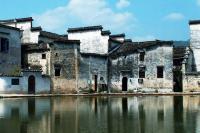
With more than 1000 years of history, Xitang Water Town in Jiashan County, Zhejiang Province is one of the six ancient towns south of the lower reaches of the Yangtze River. Covering a total area of only 83 square kilometers with a population of about 60,000, Xitang is one of the small typical water towns in China.
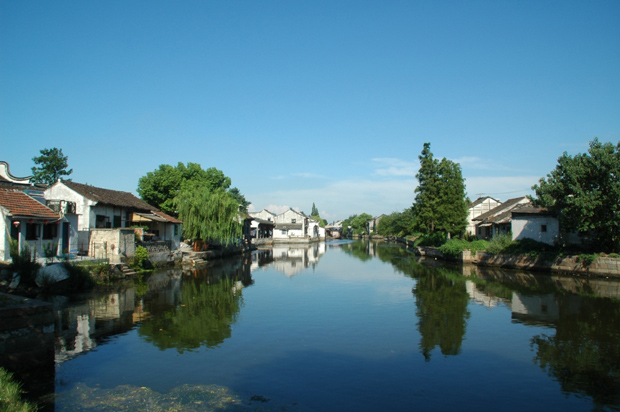
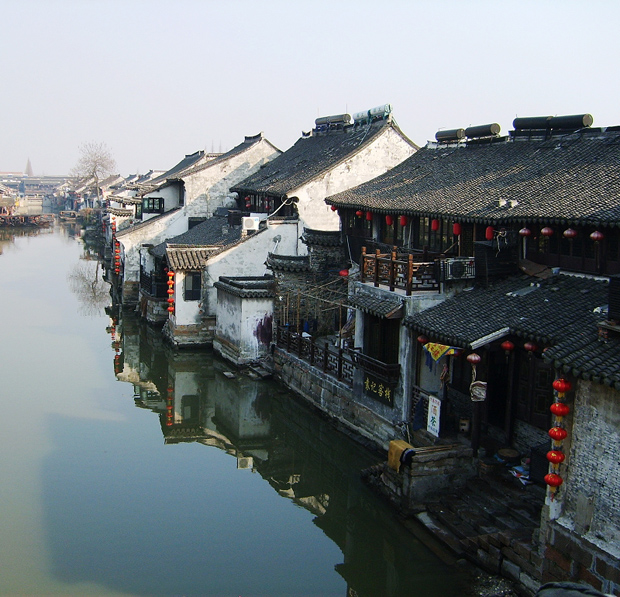
Sailing through the liquid street of Xitang Town, you can appreciate its beauty and deep-rooted culture. The town maintains many well-preserved architectural structures from the days of the emperor. Nine rivers run through the town divide it into eight parts, while over 100 bridges connect the water-town into one entity. The streets with the town’s shops are built along the river. Much purchasing was done on the boats or banks. Thus, a special structure that linked the river and stores, as well as protected people from the sun and rain, was created-the ceilinged corridor, which was passed down from generation to generation and eventually became a tradition.
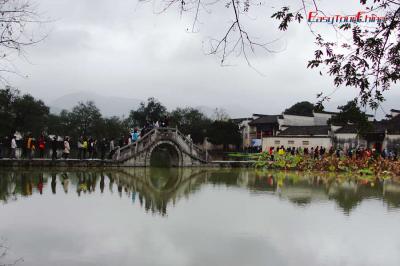
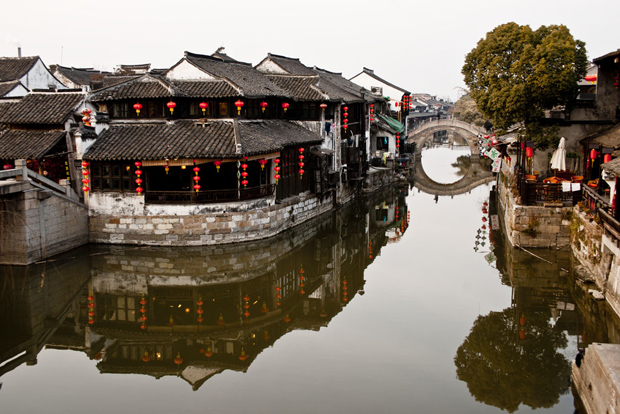
The Xitang ancient town has always been like a changing folk tale of water town images: “houses on the river, bridges on the river, people on the bridges, boats under the bridges, stores on the bridge ends and reflections in water” through the generations.
In 2003, Xitang was included in the first batch of China's Historical and Cultural Famous Towns. Later, it was awarded the "Outstanding Achievement Award for Cultural Heritage Protection in the Asia-Pacific Region" by UNESCO. In 2006, the ancient town of Xitang was included in the China's World Cultural Heritage Preparatory List. Since 2013, the Xitang Hanfu Culture Week (Xitang Hanfu Festival) has been held every year. Therefore, during your Hangzhou travel or trip to eastern China, don't miss Xitang.
China Xitang Water Town Facts:
Brief History of Xiang Town
Xitang boasts a long history, being one of the birthplaces of ancient Wu-Yue culture. Legend has it that during the Spring and Autumn Period, Wu Zixu of the Wu Kingdom developed water conservancy and water transport here, digging an artificial canal called Wu Zitang, drawing water from north of Xushan Mountain directly into the area. Therefore, the place was called Xutang. Because "Xu" and "Xi" are pronounced similarly in the Wu dialect, it was also called Xitang.
During the Sui and Tang Dynasties, the Grand Canal of China connected north and south, and Xitang Ancient Town drew water from the canal, creating a dense network of waterways. By the Southern Song Dynasty, the village had reached a certain size and a market had emerged. By the Ming and Qing Dynasties, Xitang had developed into one of the earliest and most prosperous commercial towns in Jiangnan.
Therefore, people summarize the history of Xitang Ancient Town as: the rivers of the Spring and Autumn Period, the town of the Tang and Song Dynasties, the architecture of the Ming and Qing Dynasties, and the people of today.
What to See in Xitang Water Village: Top Attractions
The Temple of the Protector of the Nation and the Grain Transport King
Also known as the "Temple of the Seventh Lord", it was first built in the late Ming Dynasty. Legend has it that a grain transport official surnamed Jin passed through the town at a time when a severe locust plague had struck, leaving the people with no harvest. Moved by compassion, Jin secretly distributed grain to relieve the people, sacrificing himself in the process. After Jin's death, the imperial court investigated and posthumously conferred upon him the title of "Marquis of Beneficiary," later further elevated to "King Protector of the Nation and the Grain Transport King."
Every year on the third day of the fourth lunar month, the Seventh Lord's birthday is celebrated. On this day, people from all walks of life in the town hold community ceremonies, attracting merchants from all over, forming a temple fair.
Drunken Garden (Zuiyuan)
It is named after the Drunken Sutra Hall of the Wang family residence. Originally built in the Ming Dynasty, it features ancient brick flower beds and a rare micro-brick arched bridge in Jiangnan. The main hall, "Yixiangzhai," houses an exhibition of woodblock prints depicting the water town scenery by Wang Heng and Wang Xiaozheng, father and son, showcasing the cultural heritage of an ordinary family in Xitang.
>> Explore more famous Water Towns Nearby Shanghai
Wang Residence
The Wang family originated from Wang Yuan, the commander of the Imperial Guard during the Song Dynasty. After Wang Yuan escorted Emperor Gaozong of Song, Zhao Gou, south, the Miao-Liu Rebellion occurred, and his descendants went into hiding in the Hangzhou-Jiaxing-Huzhou area. During the Shunzhi and Kangxi reigns of the Qing Dynasty, one branch of his descendants moved to Xitang and built this residence, a typical example of Ming and Qing Dynasty residential architecture.
Xiyuan Garden
Xiyuan Garden was the private residence of the Zhu family during the Ming Dynasty. It is a typical building of a wealthy family in Jiangnan, featuring pavilions, terraces, rockeries, and fish ponds. Currently, the garden houses exhibition halls such as the "Zhu Nianci Fan Calligraphy Art Museum," the "Hundred Seals Museum," and the "Nanshe Exhibition Hall."
>> Related reading: Best Chinese Gardens: Four Great Classic Gardens in China
Button Museum
Located on West Street, the Button Museum houses over a thousand buttons of various types from the Han Dynasty to the present day.
Zhang Zheng Root Carving Art Museum
Root carving artist Zhang Zheng's works are seven parts natural and three parts man-made, with over five hundred large pieces listed in the Guinness World Records. Covered walkways: The covered walkways along the river in Xitang are a unique type of ancient Chinese architecture in the water town that connects the waterway with shops and provides shade and shelter from the rain. Xitang still preserves more than 1,300 meters of covered walkways.
Top Things to Do in Xiang Water Village
Appreciate the Architecture of the Ming and Qing Dynasties
The outstanding ancient Chinese dwelling houses in West Town, Zhejiang Province include Zengfu Hall and Xue House. Ancient temples such as Guhuidi Suolangwang Temple, Shengtang Temple, and the famous gardens Xiyuan and Zhuiyuan are also present.
Apart from the architectural culture of the houses and gardens themselves, the interiors of the houses often display historical relics; or showcase the bamboo carvings, wood carvings, bricks, stones, and corbels collected by the owners; or open the doors of the halls and reading rooms; or display the rare ancient books and calligraphy scrolls collected by the family.
Nine rivers form a three-horizontal-one-vertical water network pattern, dividing the Xitang water town into 8 sections. By 1998, the town had built 104 bridges. Since the Song Dynasty, there have been 11 bridges built in West Town, including Anren Bridge, Anjing Bridge, Anshan Bridge, Wufu Bridge, and Yongning Bridge. In the Qing Dynasty, there were also bridges such as Wu Long Bridge, Du Cian Bridge, and Lai Feng Bridge. Most of these ancient bridges are single-arch or three-arch stone-column wooden-ribbed bridges. The bridge craftsmanship is exquisite and the structures are still well-preserved to this day.

Xitang Hanfu Festival
The Xitang Hanfu Culture Week, initiated by musician Vincent Fang in 2013, is an annual cultural event themed around Hanfu (traditional Han clothing) held from late October to early November in Xitang Ancient Town. The event focuses on showcasing traditional Chinese clothing and etiquette, encompassing dozens of activities including a dynastic carnival, a traditional water wedding, a Hanfu-themed matchmaking event, and a Chinese-style market.
In addition, Xitang Ancient Town hosts various traditional activities during Chinese New Year, Lantern Festival, the Beginning of Summer, Dragon Boat Festival, and Mid-Autumn Festival.
Boating in Xitang Water Town
Even today, cargo boats still frequently arrive carrying water chestnuts, lotus roots, fish, shrimp, and newly harvested rice. Sometimes, the waterways are so crowded with cargo boats that they are lined up end to end, resembling a fleet of transport ships on the ancient Grand Canal. Trading is convenient, as the boats can easily conduct business near the stone steps of riverside houses and the wide stone wharves along the banks.
Boating and tea tasting have always been common leisure activities for the literati and scholars of Xitang. During the day or at night, take a small, hand-rowed boat and cross one ancient bridge after another...
>> Compare Xitang VS Tongli
Appreciate Traditional Music and Drama
Tiange, also known as Wu Di Songs or Zi Ye Songs, are rural folk songs passed down by the people. They are still sung in the adjacent areas of Jiangsu, Zhejiang, and Shanghai including West Town and are a historical portrayal of rural life in the Taihu River Basin. The original musical drama "Five Girls" adapted from West Town Tiange won the "Wenhua Award" at the 7th China Art Festival.
In addition, "Jiangnan Suzyu" is a traditional Chinese music of the Jiangnan region. In the ancient courtyard of Xiyuan in the West Town water town, you can hear the genuine Jiangnan Suzyu music.
Moreover, at night, the "water stage" of Xitang will present some traditional Jiangnan opera programs.
Glimpse into Local Handicrafts
Paper-cutting is widely spread in the folk of Jiashan County, mainly popular in Weitang Street, Xitang Water Town, Yaozhuang Town, and Ganqiao Town.
Printmaking
The printmaking in Xitang Town, China includes woodblock, stone plate, copper plate, zinc plate, and hemp glue plate varieties.
Experience the Authentic Lifestyle of Jiangnan Water Town
Xitang, with its profound historical heritage and unique water-town charm, is hailed as a "living thousand-year-old town". It is not merely a tourist destination but also a vibrant community where residents live and work, maintaining their traditional way of life.
The buildings in Xitang Town were originally constructed during the Qing and Ming Dynasties. Some look like rainbows over the river and others like long flutes. Life for Xitang locals is calm and easy, full of comfort and peace, no difference from the lifestyle of their ancestors in thousands of years ago. The elderly play with their grandchildren on the bridges and in the lanes, and women wash vegetables and clothes in the rivers that run beside their houses.
Walking on the street in Xitang Water Town, you can view its cobbled streets, old buildings, arching bridges and rowing boats. All these picturesque, like a graceful poem and a fair-sounding song, will surely captivate any visitor home and abroad.
>> Recommended Real-life China Tours to connect with local people and authentic culture
Local Food to Taste in Xitang
Don't miss the delicious Chinese food in Xitang, such as lotus leaf steamed pork, the "Sending-off Son" dish, the Eight-Ingredient Cake, and the Coix Seed Cake.
Xitang is also known for its glutinous rice dumplings, in short, just call it Zongzi. The ones here are filled with flavored pork and soy sauce, wrapped with plant leaves. The storeowners make and sell so many of these delicious rice dumplings so quickly that it looks like they could wrap them it in their sleep.
How to Get to Xitang: Transportation Options
Learn how to travel from Hangzhou, Suzhou, or Shanghai to Xitang Water Town.
By plane
By high-speed rail
From various railway stations across the country - Jiashan South Station - Tourist Direct Express Line or K222 Route - Xitang Bus Station (Jiashan North Station)
By bus
Where to Stay: Various Types of Accommodations to Choose from
Xitang offers a variety of accommodation options, ranging from luxurious boutique hotels to budget-friendly family inns. Xitang River View Holiday Hotel, Naera Hotel Xitang, Xitang Holiday Hotel, Impression Xitang Coffee Hotel are among the most popular.
More Attractions in Hangzhou