Top 15 Fascinating Facts About the Silk Road
Table of Contents
- 1. What Was the Silk Road?
- 2. Where Did the Silk Road Start and End?
- 3. How Long Was the Silk Road?
- 4. Who Built the Silk Road?
- 5. How Huo Qubing Secured the Silk Road?
- 6. The Origin of the Name “Silk Road”
- 7. Was the Silk Road a Single Route?
- 8. How Did People Travel Along the Silk Road?
- 9. Beyond Silk: What Was Traded Along the Route?
- 10. Tasting the Silk Road: How Food Traveled Across Continents?
- 11. Ideas That Traveled Further Than Goods
- 12. Famous Travelers of the Silk Road
- 13. The Rise and Decline of the Silk Road
- 14. The Silk Road as a UNESCO World Heritage Site
- 15. The Silk Road in the Modern Age
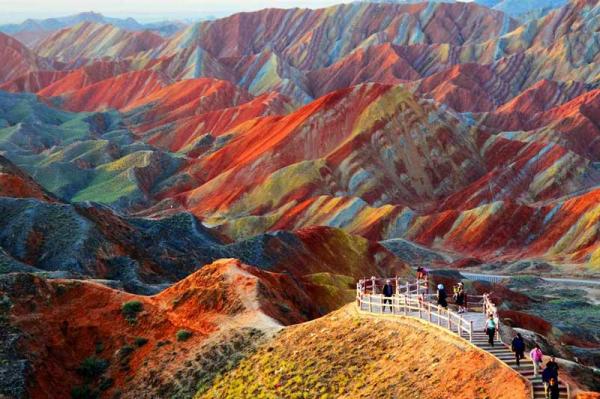
In China, there is a road so legendary it once connected the entire ancient world. That’s the Silk Road. Stretching from East Asia all the way to Europe, it was not just a trade route but an early version of globalization. From Qinghai Lake and the Tianshan Mountains to the flaming red landforms of Turpan and the windswept ruins of the Gobi, the landscapes along the route are as dramatic as its history.Before you start your China Silk Road tours, here are 15 fascinating Silk Road facts you should know.
1. What Was the Silk Road?
Despite the name, the Silk Road was never just about silk. In simple terms, it was ancient China’s gateway to the world—part social network, part international marketplace. The route was officially opened during the Han Dynasty, after Emperor Wu sent the diplomat Zhang Qian westward in the 2nd century BCE.
Over time, it became a massive system of overland and maritime routes linking East Asia, Central Asia, the Middle East, Africa, and Europe. Digging into facts about the Silk Road, you’ll see it’s one of history’s most important networks of cultural exchange.
2. Where Did the Silk Road Start and End?
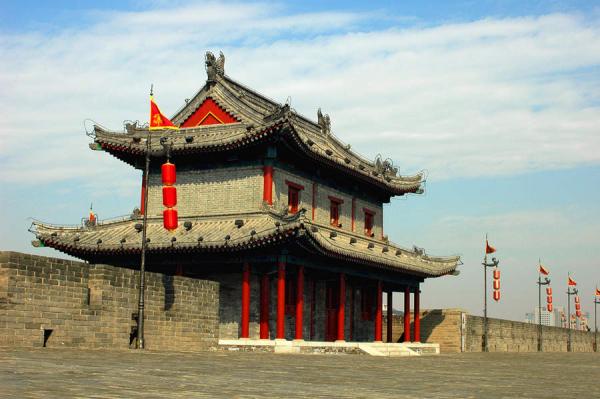
The traditional starting point of the Silk Road was Chang’an, today’s Xi’an, once the capital of ancient China. The symbolic endpoint was Rome, or more broadly, the Mediterranean region. Along the way, the road passed through today’s Kazakhstan, Uzbekistan, Iran, Iraq, Syria, and beyond. Therefore, it is a truly international highway of its time.
3. How Long Was the Silk Road?
If you’re wondering how long the Silk Road is, the short answer is: very long. The main overland route stretched roughly 6,400 kilometers (about 4,000 miles), with more than half of it running through China.
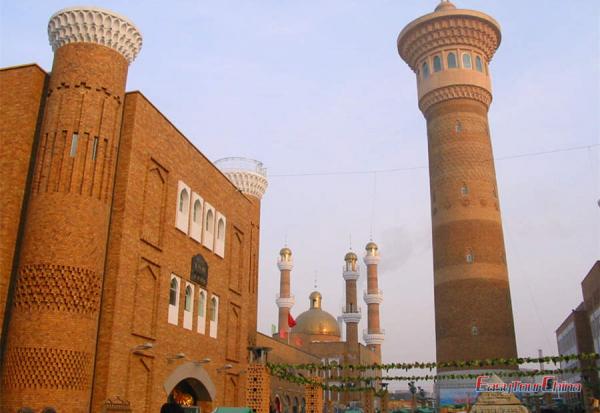
It usually set out from Shaanxi, passed through the narrow but vital Hexi Corridor in Gansu, and then spread out across Xinjiang, passing important hubs like Urumqi and Kashgar, which is a key to understanding the Silk Road facts.
From there, the paths pushed on through harsh land and long distances, slowly linking China with the Western world. With distances this long, almost no one went the full route. Instead, goods were passed along step by step, moving west through many different hands.
>> Recommended 10-day China Silk Road Tour from Xi’an to Dunhuang & Turpan
4. Who Built the Silk Road?
Here are some crucial facts about ancient China’s Silk Road. You may wonder when the Silk Road was established. Actually, the Silk Road timeline began with what looked like a failed mission. Zhang Qian was sent west by Emperor Wu, one of the Greatest Chinese emperors, to ally against the Xiongnu nomads. He was captured, held for ten years, escaped, and still continued his journey.
Although the alliance never happened, Zhang Qian returned with priceless knowledge about Central Asia—its people, goods, and geography. His reports laid the foundation for official trade and diplomacy, making him the builder and one of the most important figures for the Silk Road.
5. How Huo Qubing Secured the Silk Road?
Opening the Silk Road was one thing; keeping it safe was another. Military history is also one of the top 5 facts about the Silk Road. In 121 BCE, young general Huo Qubing led rapid campaigns into the Hexi Corridor to chase away the Xiongnu, who were creating trouble for merchants.
After his successes, the Han Dynasty established four key commanderies: Wuwei, Zhangye, Jiuquan, and Dunhuang, with garrisons, watchtowers, and sections of the Great Wall. Due to such military protection, merchants could finally travel west more freely on this crucial trade network.
6. The Origin of the Name “Silk Road”
Here is one of the basic Silk Road facts concerning its name. People in ancient China never called it the “Silk Road.” That name actually came much later, in the late 1800s, when a German geographer named Ferdinand von Richthofen was digging into old trade routes and noticed how prized Chinese silk was in the West. Silk, especially in places like ancient Rome, had a reputation for pure luxury. Hence, he gave it the title "Silk Road".
7. Was the Silk Road a Single Route?
Detailed Silk Road information facts reveal that, contrary to what maps often depict, the Silk Road wasn't simply one road. Instead, the Silk Road route map constantly changed depending on politics, climate, and local control - merchants would take detours around deserts or follow seasonal paths through mountains and grasslands for safety.
Historiographers typically divide history into five major route systems:
Based on these facts on Silk Road routes, it could be seen less as a highway and more as an ancient GPS network.
>> Recommended 15-day China Silk Road In-depth Discovery

8. How Did People Travel Along the Silk Road?
Here are some cool facts about the Silk Road transportation. On land, transportation was heavily dependent on animals for travel. Camels were the ultimate desert vehicle, capable of transporting heavy loads without needing water sources. Horses, oxen, mules, donkeys, and yaks may have also been employed depending on terrain, climate, or distance considerations.
Also, ox- or horse-drawn carts were used to carry goods across open plains and desert roads. Whenever animals couldn’t go farther, people stepped in, hauling loads by hand and keeping things moving through some seriously tough terrain.
>> See China Gobi Desert Adventures
9. Beyond Silk: What Was Traded Along the Route?
Among the most important facts about the Silk Road is the variety of trade. Specifically, on these ancient trade routes in China, aside from the silk trade, the Chinese also used it for other goods, including porcelain, tea, lacquerware, tools, and paper that became status symbols across Eurasia.
China, in return, received Roman glassware, Persian silver, jade from Khotan, woolen textiles, and frankincense. Furthermore, horses from Central Asian breeds prized by the Han military were even imported as strategic assets.
10. Tasting the Silk Road: How Food Traveled Across Continents?
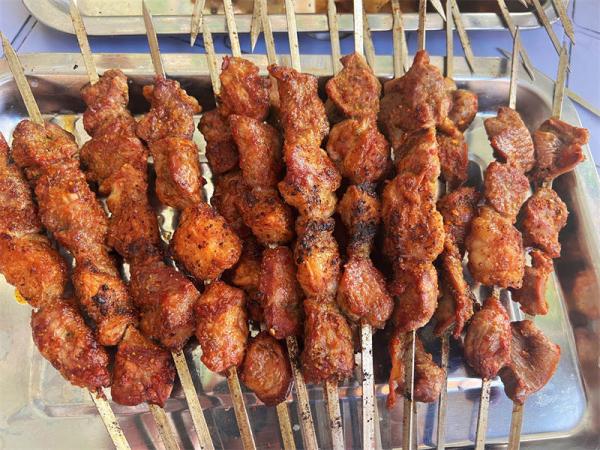
One of the top 10 interesting facts about the Silk Road is how it permanently changed global diets. While silk, spices, and other goods on the Silk Road were traded for profit, food was shared for survival and pleasure. It brought sesame, pomegranates, walnuts, cucumbers, and carrots from the West into China. Conversely, Chinese peaches and apricots traveled West.
Today, when traveling in China on the Silk Road, you are literally tasting Chinese history with every meal, from naan bread to spicy lamb kebabs.
>> Recommended 16-day China Culinary Tour
11. Ideas That Traveled Further Than Goods
Technology: Changing the World Quietly
Why is the Silk Road important? Silk Road facts reveal that the route was like an early tech highway, passing ideas like the Four Great Inventions of China that ended up changing everyday life. Paper-making moved west and later sparked big shifts in learning and record-keeping, followed by printing, gunpowder, and the compass.
China, meanwhile, picked up new astronomy and medical knowledge from India, and even sugar-making skills from the Islamic world.
Religions and Language: A Two-Way Conversation
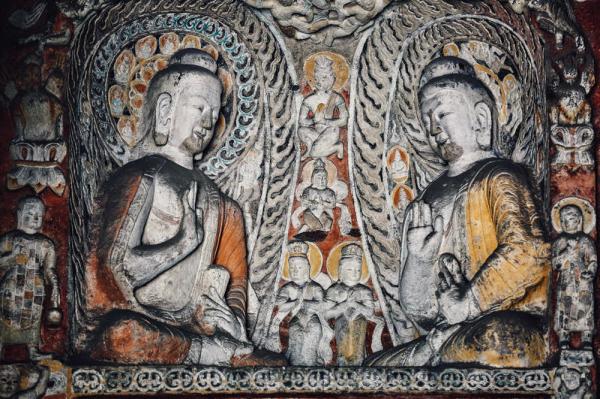
Religions and languages on the Silk Road moved just as freely as people did, which is also one of the top facts about the Silk Road you should know. Just as Sogdian became the ancient lingua franca that allowed traders to communicate across borders, Buddhism made its way from India into China and slowly integrated into daily life, shaping art, ideas, and how people saw the world.
Along the road, places like the Dunhuang Mogao Caves show this mix in a very real way, and faiths like Islam and Christianity followed the same paths, helping turn cities such as Chang’an into early crossroads of cultures.
>> Recommended 10-day Classic Silk Road Tour plus Buddhist Grottoes Exploration
Art, Music, and Daily Life
Looking for the Silk Road fun facts? Culture showed up in the fun stuff, too. Instruments like the pipa and new dance styles came from Central Asia and took off during the Tang Dynasty. At the same time, Chinese painting styles traveled west, proving that everyday taste and creativity moved just as freely as goods.
12. Famous Travelers of the Silk Road
An interesting fact about the Silk Road is that it was walked by some of history’s greatest explorers. Monk Xuanzang is perhaps the most famous Chinese traveler; he traveled for years across India in search of Buddhist scriptures before recording what he saw with remarkable detail. Marco Polo later introduced Europe to China's cities, systems, and wealth, even though some details remain controversial.
Additionally, thousands of merchants, translators, monks, and diplomats traveled step by step between regions. Though never being recorded in history books, their constant movement and interconnection kept the Silk Road alive.
13. The Rise and Decline of the Silk Road
The Golden Age
If you look at Silk Road history facts, you will see a clear pattern of rise and decline. The Silk Road reached its peak during the Tang Dynasty. Back then, Chang’an was buzzing, packed with traders, scholars, artists, and travelers from all over Eurasia. Because the government kept things relatively open and the times were fairly stable, Chinese culture and business grew together instead of getting in each other’s way.
Gradual Decline
However, that high point didn’t last forever. Once sea routes took off in the late Ming period, land travel started to feel slower and less practical, and fewer traders bothered with the long haul. Add in political chaos, changing borders, rough weather, and waves of disease, and those caravan journeys became a real gamble.
>> Recommended 20-day China Silk Road Train Tour from Beijing

14. The Silk Road as a UNESCO World Heritage Site
One of the most vital facts about the Silk Road is its status as a World Heritage Site. In 2014, the land routes of the Silk Road finally got the global recognition they deserved when the stretch from Chang’an to the Tianshan Mountains made it onto UNESCO’s World Heritage list. For China, it also marked its 47th World Heritage site, but more importantly, it helped put long-overlooked places back on the map. Today, many of these sections are protected and still open to curious travelers who prefer a China heritage tour or want to walk through history instead of just reading about it.
15. The Silk Road in the Modern Age
The Silk Road did not disappear; rather, it changed. In the 21st century, modern initiatives aim to revive cooperation through infrastructure development, trade agreements, and cultural exchange on the Silk Road. Remarkably, new railways and highways are being built follow its old paths once traced by camels and caravans.
Also, for travelers, this means the route is no longer just a collection of fun facts about Silk Road history. You can embark on Silk Road adventures in China, featuring Gansu and Xinjiang tours, to wander through ancient streets, visit oasis cities, and see how this legendary route still shapes the world today.
>> Recommended 11-day Amazing Silk Road Odyssey Tour from Xi’an to Gansu
Travel the Silk Road with Easy Tour China
Learning Silk Road facts is one thing, but standing on it is a completely different feeling. With Easy Tour China, you can travel this route in a way that actually matches your pace. Whether you’re ticking off the classics on tours of Gansu, Xi’an, and Xinjiang or slowing down in smaller oasis towns most people skip, there’s room to travel deeper, not just faster.
Join one of our ready-made China Silk Road tours, or contact us to customize a private trip. You focus on the experience; we’ll take care of how everything connects.